
Washington landlord and nicotine-control non-profit The Truth Initiative has a problem. Despite an annual budget of nearly $100m and net assets of around $600m, they’re struggling for engagement and connection with their target audience: young people who use nicotine.
In recent days, they’ve posted some desperate stuff, including the CEO Kathy Crosby’s oddball suggestion to “leverage” dating apps to discourage smoking and vaping. Writing in Fast Company, Crosby bemoaned the fact that cigarettes have become counterculture again, blissfully unaware that this dynamic often happens when the uncoolest people in the world tell youth they shouldn’t do something.
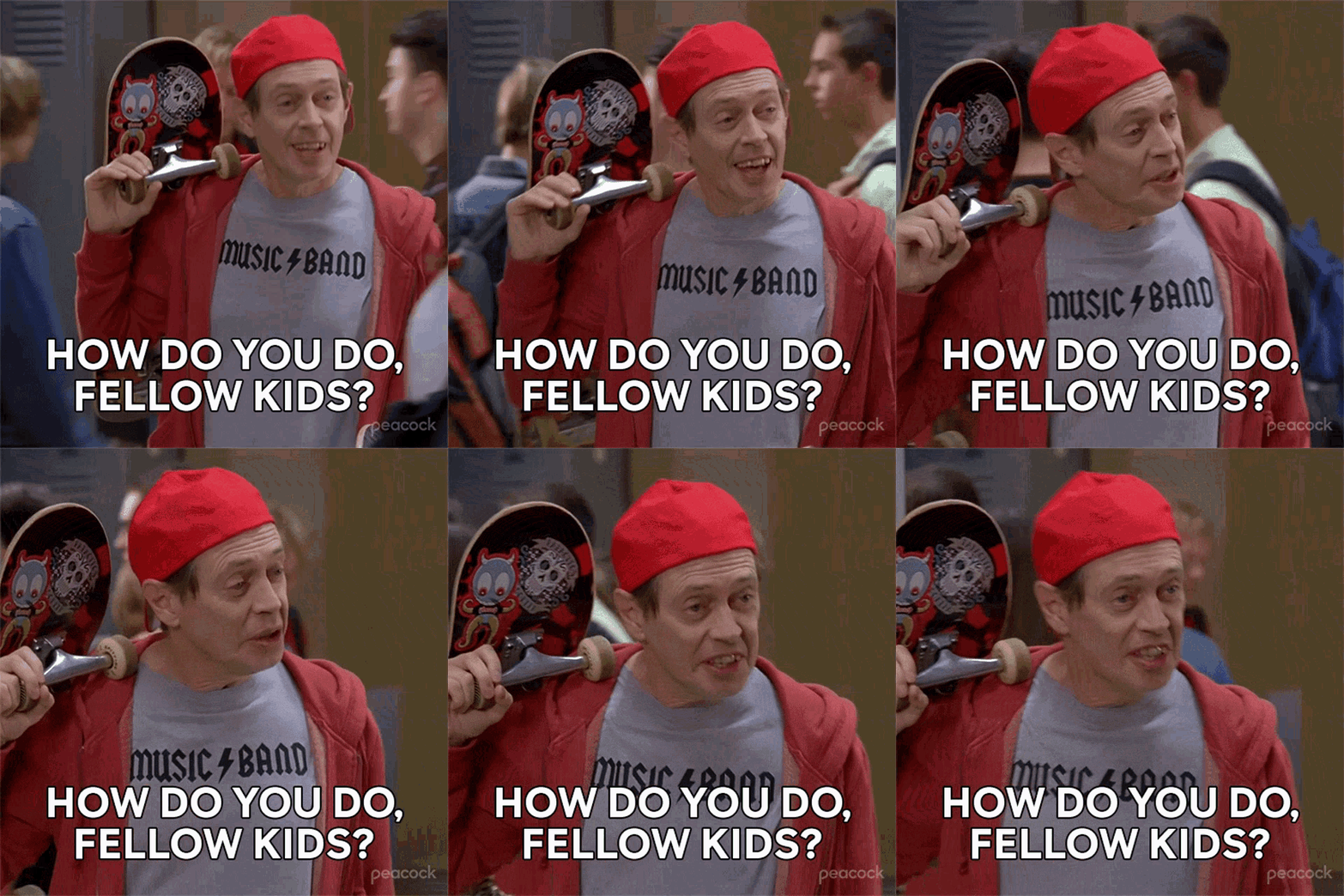
In the same article, Crosby brings up a Truth Initiative campaign from a decade ago called truth. She doesn’t see how the Left Swip Dat music video, which was promoted at the Grammy Awards, isn’t going to connect with their target audience.
It looks and feels like a Tim and Eric sketch. Indeed, you’d be forgiven for thinking their marketing head was this guy:
Ten years on, Crosby is still pulling out the same inane argument that drives the video. In essence, the thesis is that if you smoke, you’re not going to get matches. Yet, this is a fundamental misunderstanding of a target that, in part, associates smoking with being grown up or general rebelliousness, qualities which never really harmed anyone's dating life when I was young.
The other part of Crosby’s madcap dating app plan is to connect platforms to Truth Initiative. The idea here is that if someone puts smoker or vaper in their dating profile, they could be linked to the EX Program. In other words, users who opened the app with the intention to find a partner could be funnelled into a quit program.
There is something a bit sinister about all of this. Let’s break this down.

Low engagement
Firstly, Truth Initiative is struggling to reach its market. They have a huge marketing budget, the type that can pay for ad space for their cringey videos on the Grammys. However, smoking levels among US youth are historically low (use in the last 30 days is just 1.4% of middle- and high-school students), so despite media histrionics, their alarmist messaging doesn’t connect with reality. At this point, even the most naive and jittery parents are unlikely to be spooked out, because smoking is something they never see.
Of course, non-profits like Truth Initiative can’t admit this, because that would be to own up to their obsolescence. So, they’re stuck playing this weird game where they must exaggerate a problem in front of a dwindling audience.
Captive audience
Truth Initiative has access to a younger audience through its school-facing programme Vaping: Know the truth. When kids go to college, they also have a Tobacco/Vape-Free College Program. They are used to using their cash to muscle in on a captive audience. However, almost 40% of US youth don’t go to college immediately after school, with data suggesting this cohort is twice as likely to smoke. Dating apps are one way to go after this drop-off in their target audience.
Privacy laws
There are also stricter privacy laws and youth-protection rules that restrict the collection, sharing and use of personal data. You can’t just buy lists of people’s 3rd party data to target like you could in the past, which poses something of an issue for organisations like Truth Initiative, who need to prove the effectiveness of their reach to justify funding.
Additionally, running and measuring online campaigns and getting youth emails and sign-ups has become complex, which may explain why Truth Initiative are hypothesising a link-up with platforms that can draw in an organic audience, like dating apps.
Dating woes
Online dating hasn’t been a walk in the park for young people. In fact, if you’re on social media, you’ll see that many of them are fairly traumatised by these platforms, especially males. When you factor in that smoking and vaping rates are higher among men, it looks as if Truth Initiative are attempting to use those feelings of rejection to draw in damaged users by giving them a “reason” why they’ve had poor luck with dating apps. To me, that seems like the sort of exploitative marketing that even Big Tobacco wouldn’t stoop to.
Final thoughts
The Truth Initiative has been reduced to some desperate antics in recent years. While most people would be happy to consign Left Swipe Dat to history, Crosby’s nostalgia for that 2015 campaign is partly explained by the fact that youth smoking was around 5.5x higher, at around 9.3%. While their star was on the wane, her organisation was at least slightly relevant to the behaviour and concerns of youth.